Perspectives for an economic utilization of the saddleback pig - PERSA
Development of innovative breeding and feeding strategies for the preservation and utilization of valuable breed traits - robustness, maternalism, meat quality and roughage utilization
Project description
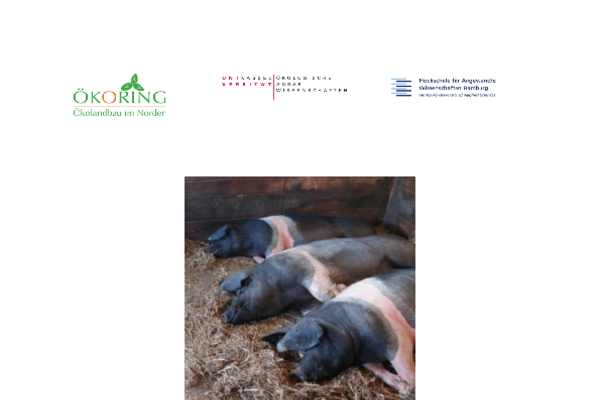
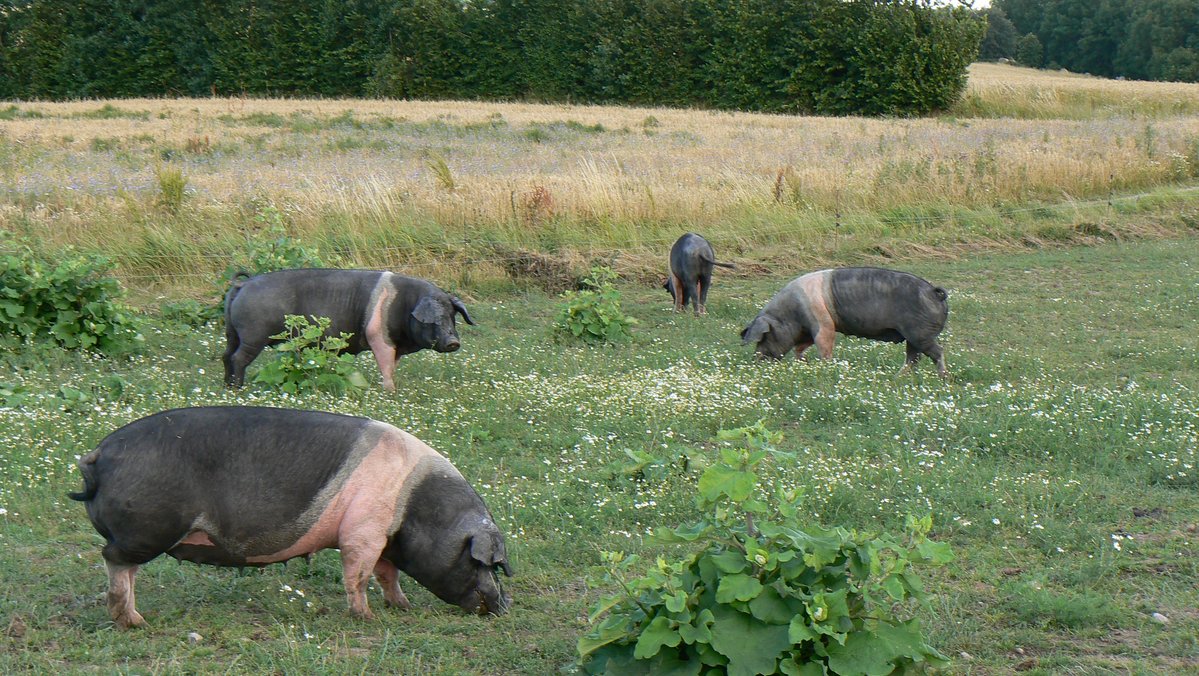
The Angler Sattelschwein is a highly endangered regional pig breed from Schleswig-Holstein with only around 100 breeding animals remaining. At the same time, this breed is said to have special characteristics: high robustness, good mothering instincts, the ability to utilise roughage and a special meat quality. The aim of the completed project was to scientifically verify these previously largely unsubstantiated assumptions for the first time and to develop prospects for the sustainable, economically viable use of the breed.
In the project, Angler Sattelschweine pigs were comprehensively examined under practical conditions and in controlled fattening trials. Among other things, genetic diversity, animal health, animal welfare, mothering ability, feeding with a high roughage content and meat quality were analysed. In addition, genomic data was collected in order to assess inbreeding, kinship and breeding potential of the small population. The results show a surprisingly high level of genetic diversity combined with a low level of inbreeding.
The studies confirmed good robustness, low piglet losses and pronounced maternal instincts, which make the Angler Sattelschwein particularly suitable for organic and extensive farming methods. It was also shown that the animals can make good use of roughage and regionally produced feed. At the same time, it became clear that fattening performance and feed efficiency are significantly lower than those of commercial pig breeds, which limits their use in large-scale marketing structures.
Another focus was on meat quality. The meat is characterised by a higher fat content and good sensory properties and is particularly suitable for sausage and direct marketing products. This results in a need for targeted marketing concepts and accompanying public relations work. To support farms in this, the project further developed the digital feeding planning tool ProFeedS, which can be used to better plan roughage into pig rations.
Overall, the project shows that the Angler Sattelschwein has great genetic and functional potential, especially for animal welfare-oriented, sustainable and regional production systems. The results provide concrete recommendations for breeding, feeding and marketing, thus making an important contribution to the long-term preservation of this rare livestock breed. At the same time, many of the findings can also be applied to other endangered pig breeds.